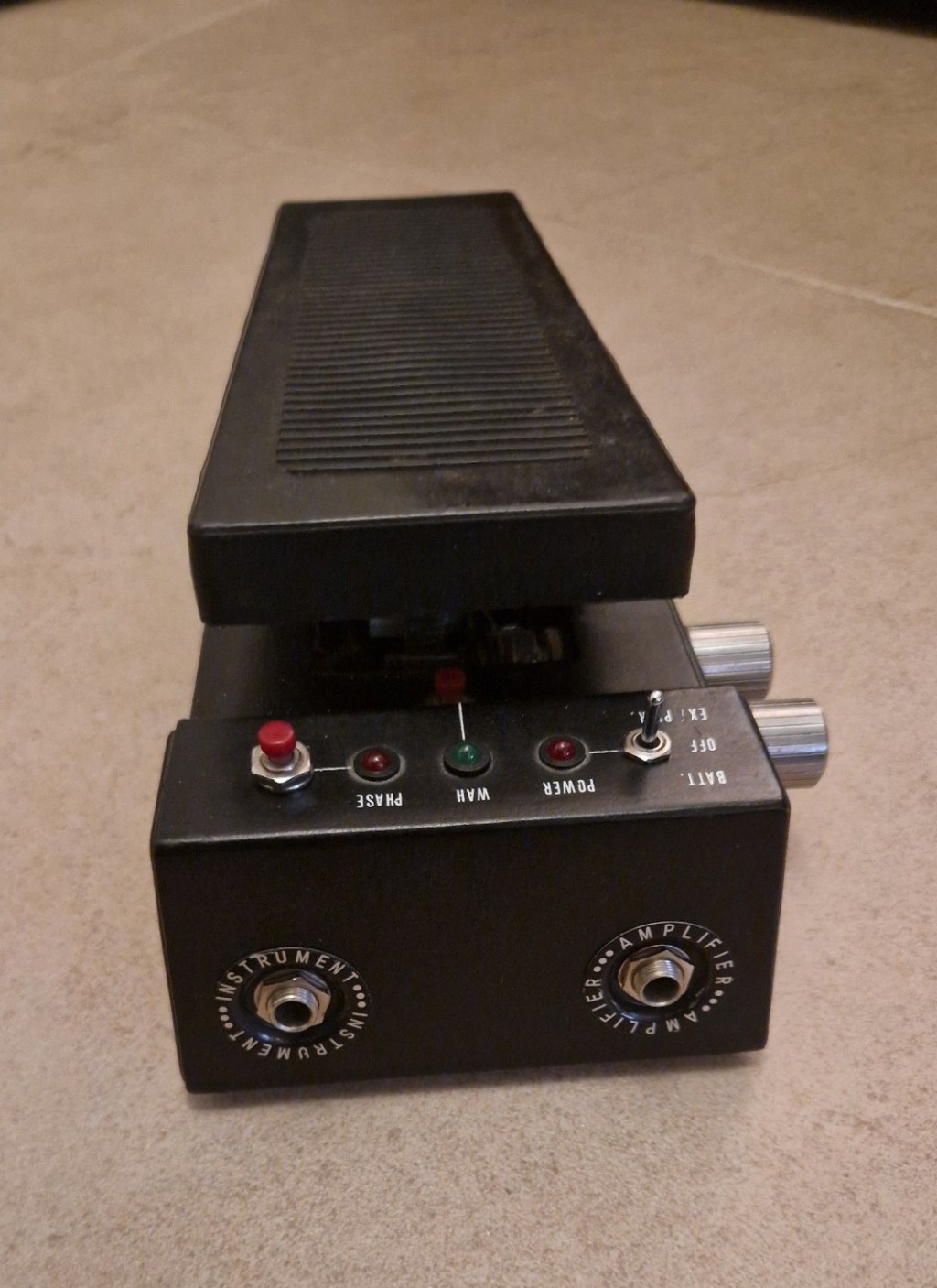
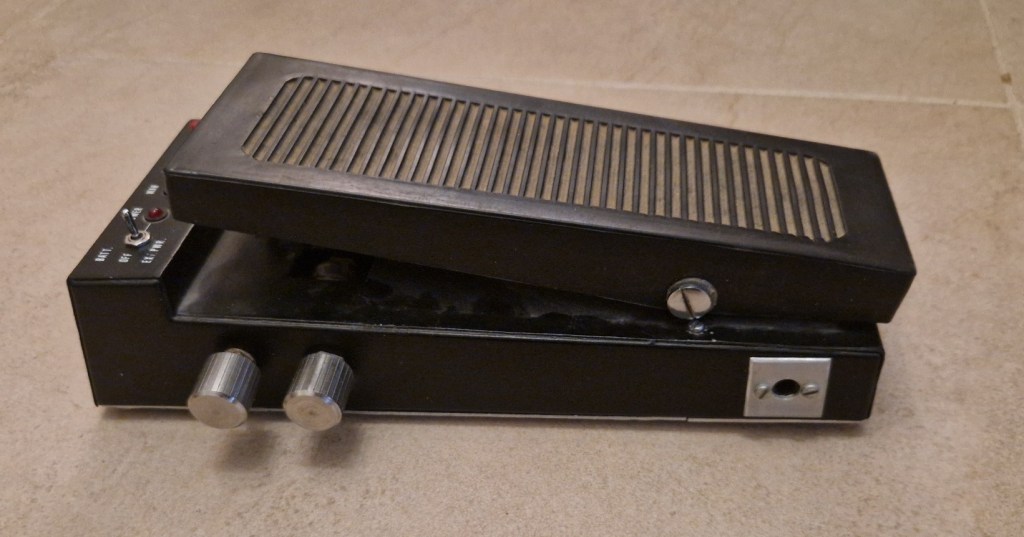
This pedal got to me in pieces; unknown if it would work properly. It was also delivered with a lot of papers from the designer / builder making sure you’d have all the files in making the unit work again. Lets phase in!
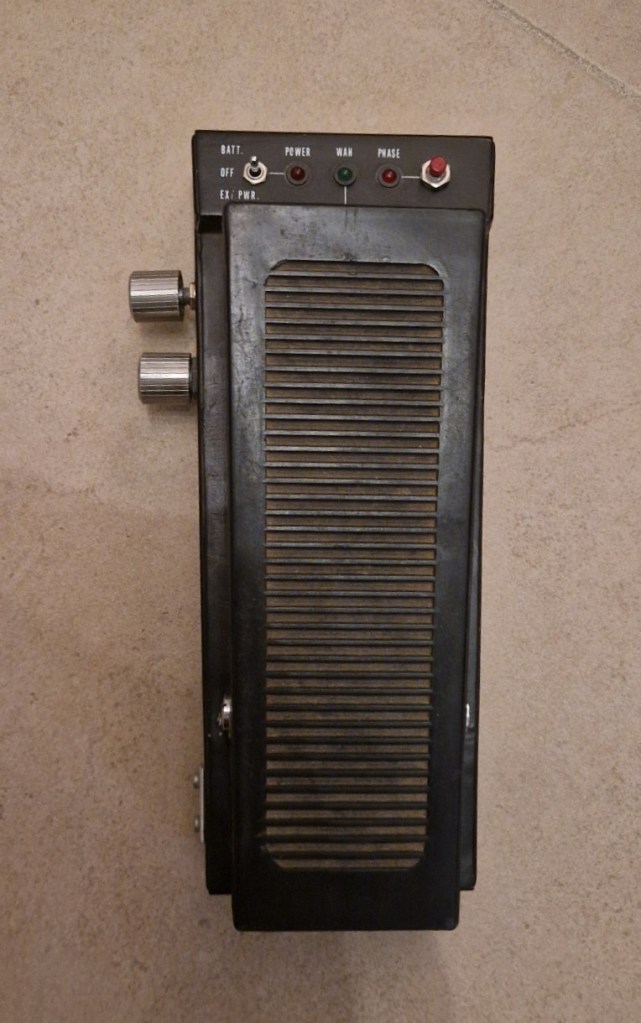
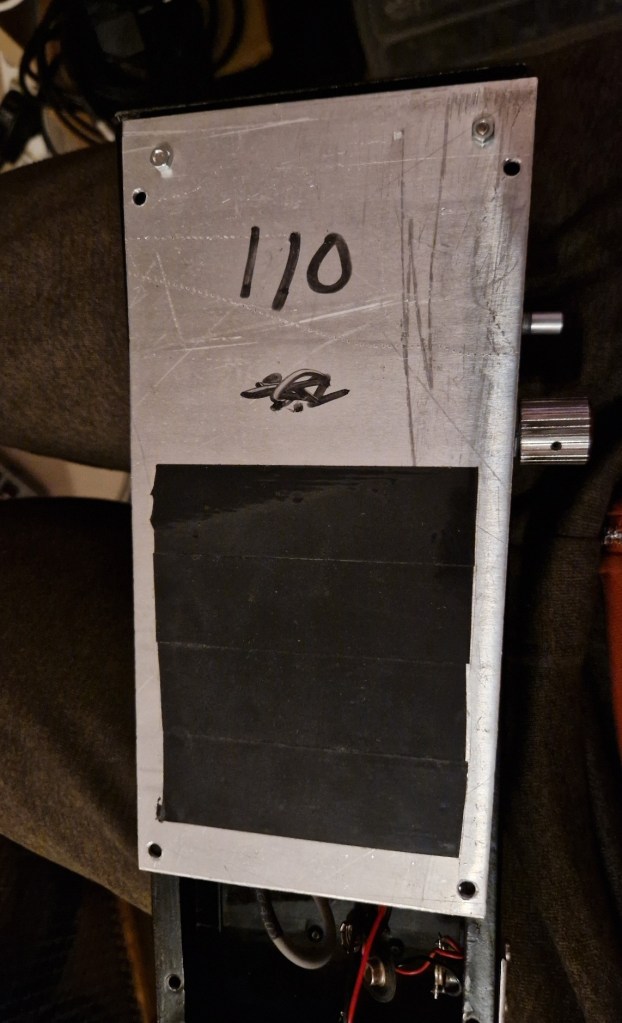
The builder was unknown to me when I started this repair. All papers are signed with AW (initials?) and a number (my best guess is that these number indicate year – month – day making this pedal built in 1986). Only one paper has handwritten comments on it in a foreign language (Swedish I figured) and the article on the phaser is also in Swedish. On the inside of the pedal the number 110 is written down; the 110th pedal?

The phaser circuit was originally printed in the Dutch magazine Elektuur in their July / August edition of 1977 called the Miniphaser. The version in Swedish was possibly reprinted in a Swedish Electronics magazine.
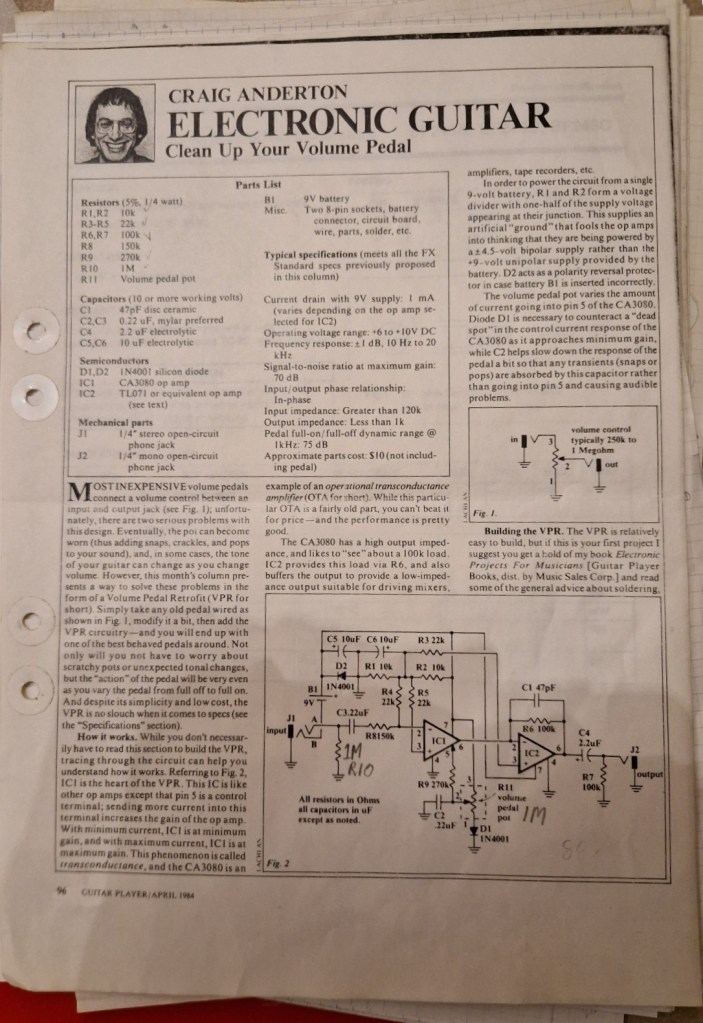
The volume pedal part was published in the April edition 1984 of Guitar Player magazine and was designed by the guru Craig Anderton. I can’t find the article online but can find this project at Tonepad called ‘Volume pedal retrofit’.
The new owner of the pedal got me in contact with the original builder: Anders Westerberg. We started emailing and he gave me some more insight:
I started with electronics when I was 13, being 61 now. I got my education in electronics in high school and at the same time I started playing the bass and got interested in music electronics. Around that time, probably 1982-83 I bought this Shin-Ei Fuzz-Wah from my brother, I think I paid 50 Swedish Crowns which is about 15 EUR in today’s value.
My friend who also was into music electronics was about to build a phaser after an article in Swedish Elektor magazine (I think it was) and offered me to buy a PCB since he had the layout on transparent film.
Around the same time I noticed an article by Craig Anderton in Guitar Player (I think it was…) about a noiseless volume pedal. So after a while the idea about putting the two of them into the same pedal came to my mind and since I was into CMOS circuitry I decided to implement digital switching as well. And the phaser circuit had a manual sweep option so I thought that would be like a wah.
I started to plan and experiment until I came up with a decent solution and after some modifications to the pedal enclosure I finally managed to cram everything inside.
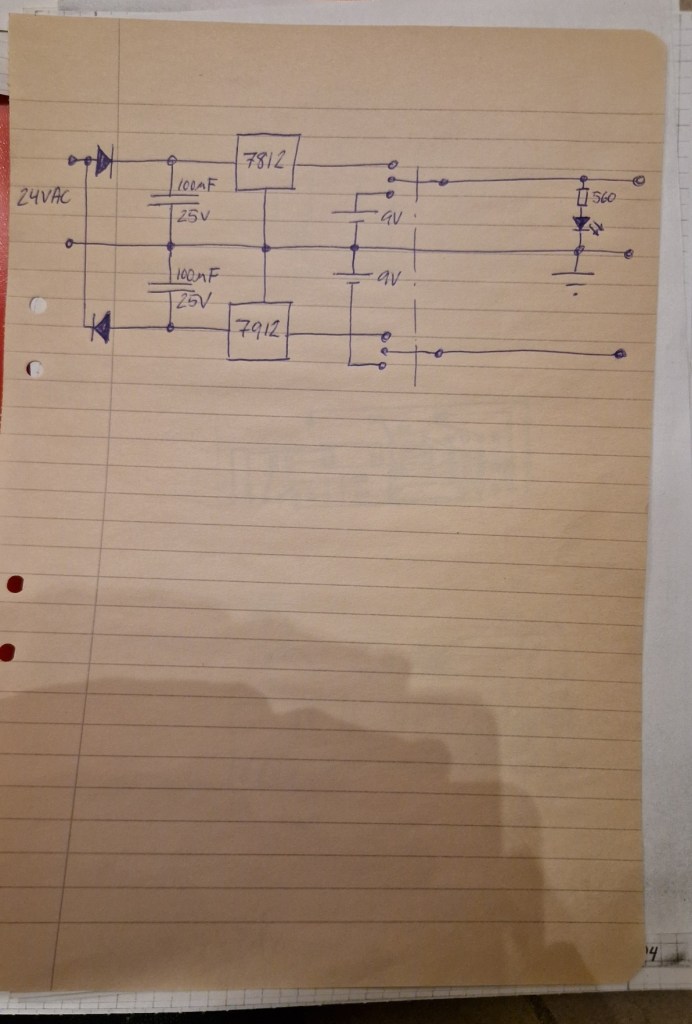
It worked but I had problems with the power supply which I redesigned, The manual sweep didn’t turn out so well. Since I didn’t play the guitar I never used it and it became unused for 40 years, I basically kept it for nostalgic reasons until I decided to let it go.
Today I would have done things differently, especially regarding the power supply but this was pre-internet.Thank God for the internet, it’s hard even for me to understand how you managed to get enough information.
The circuit
The pedal is housed in a treadle pedal that reminds me a lot of the old Shin-Ei fuzz / wah pedal. The pedal houses a Phaser, a Volume pedal and a ‘Wah’ effect. This ‘Wah’ effect is a foot controlled phaser (and thus not a real wah wah effect).
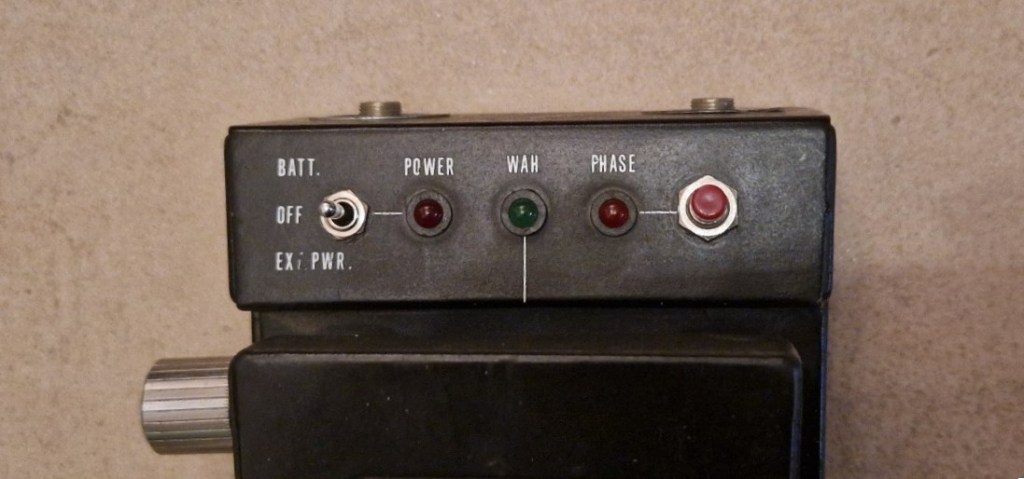
It has the inputs on the top and a small control plate on the top of the pedal with three LED’s, a momentary switch (Phaser on / off switch) and a rocker switch to choose between battery power or the AC adapter. The pedal uses two 9V batteries or a single 24V AC adapter delivering +12 / -12V in AC mode or +9 / -9V in battery mode (the unit was not supplied with the AC adapter). On the side are two knobs controlling the effect mix (‘Depth’) and the speed of the phaser (‘Rate’). Underneath the treadle is a switch to turn the ‘Wah’ on.
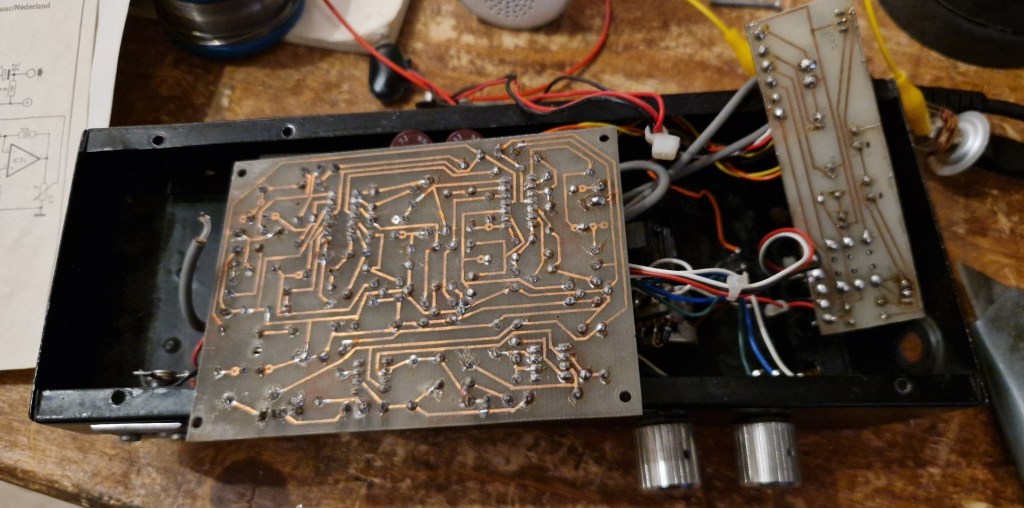
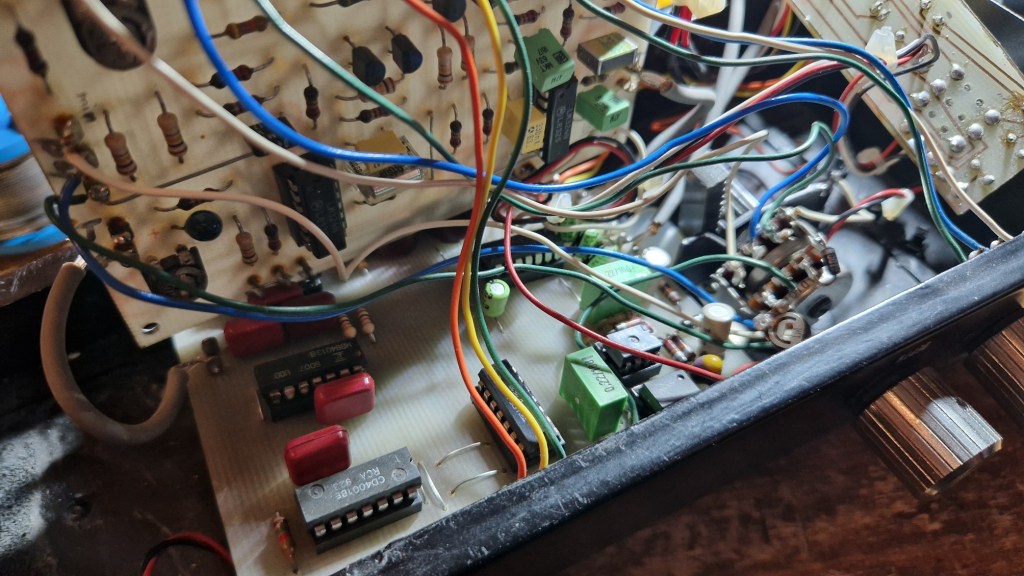
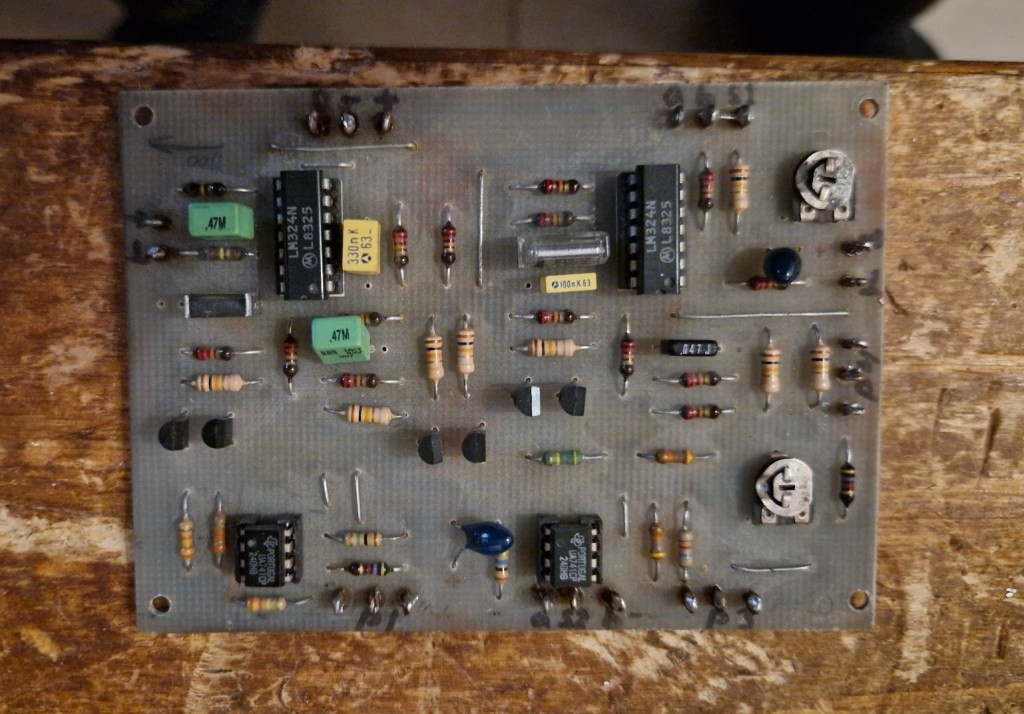
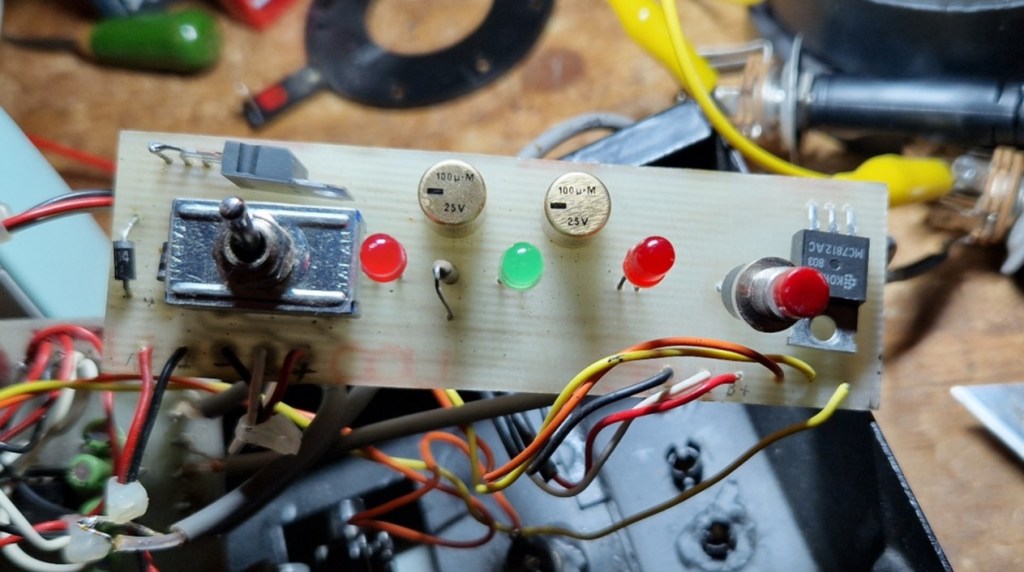
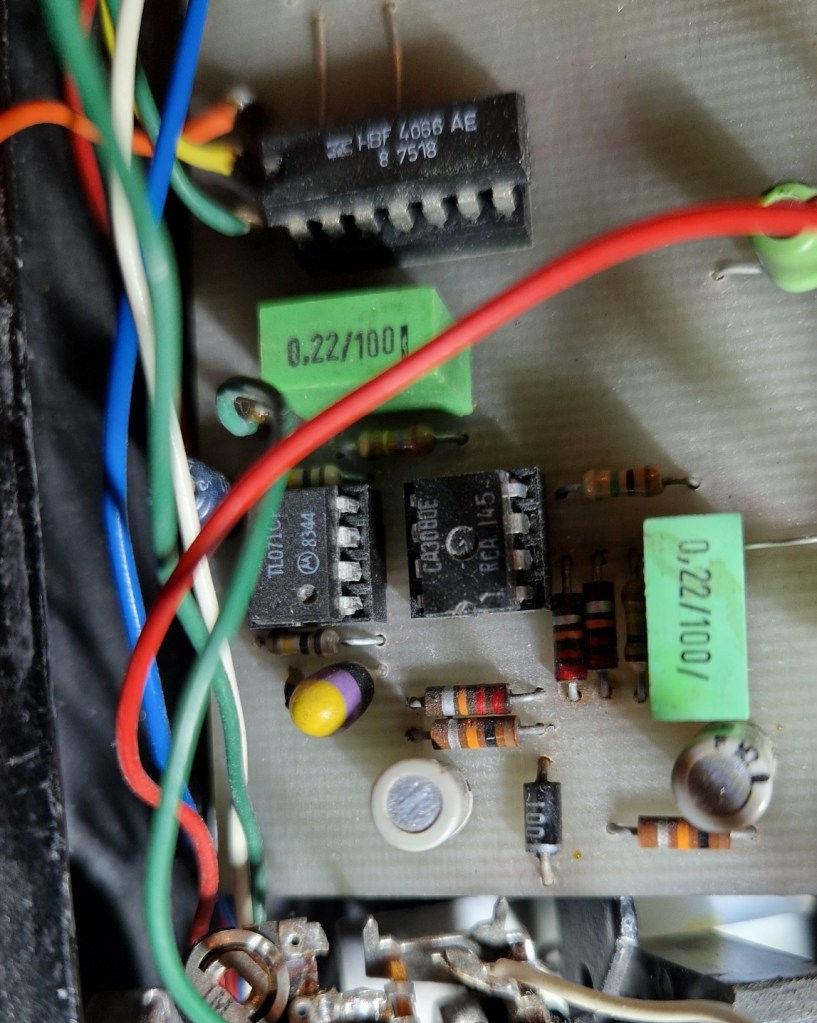
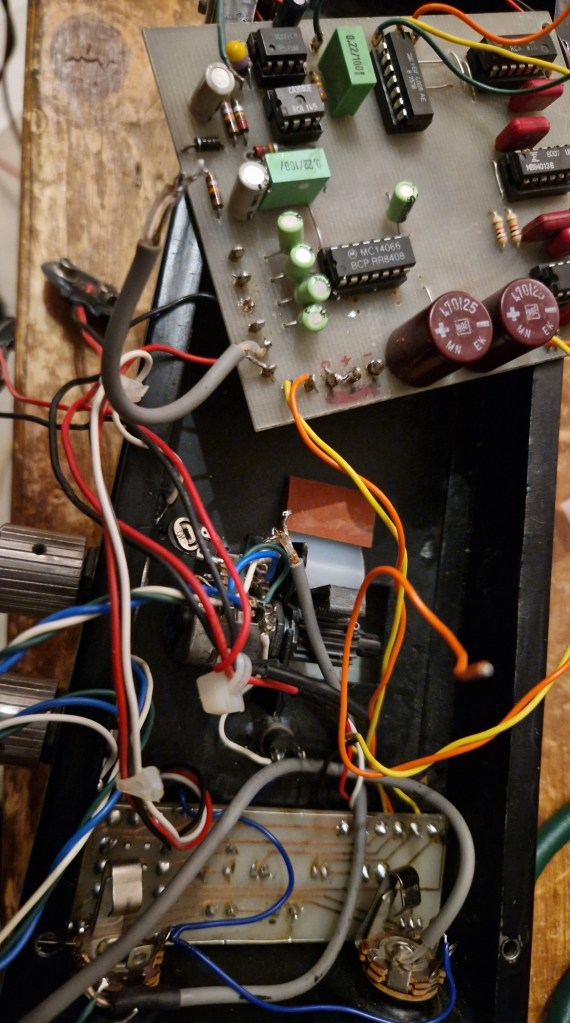
The added papers add some insight into the design of the pedal. It is a dedicated build with momentary switches that electronically switch the designed effect. I made a table to explain the functions inside that are switched:
| Effect: | Volume pedal: | Phaser: | Auto / Manual: |
| Bypass | On | Off | N/A |
| Phaser | On | On | Auto |
| Wah / Vol | Off | On | Manual |
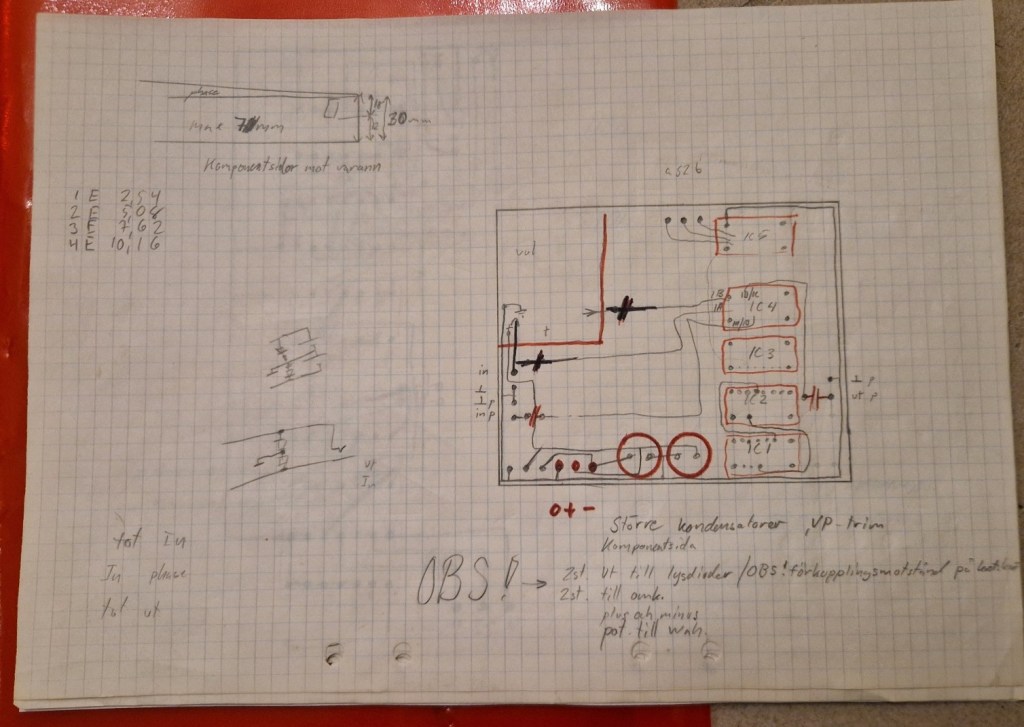
I traced part of the pedal.
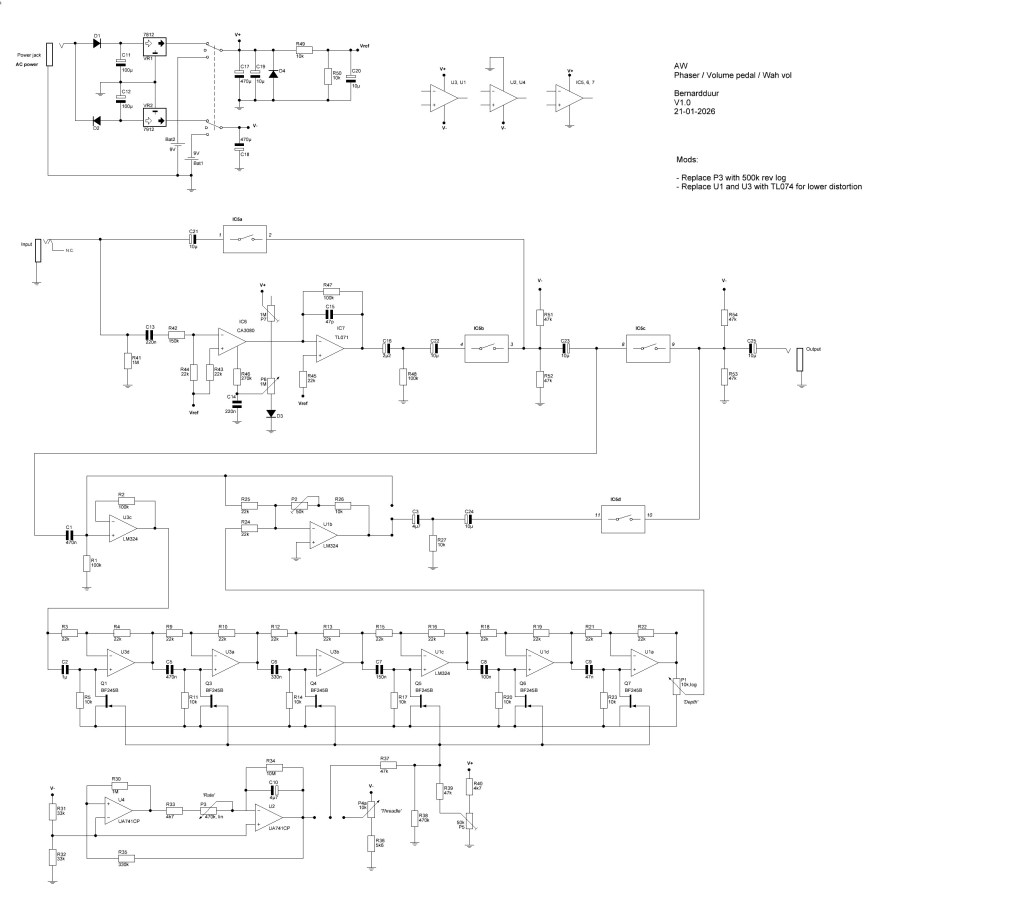
And here are the original papers on the circuit.
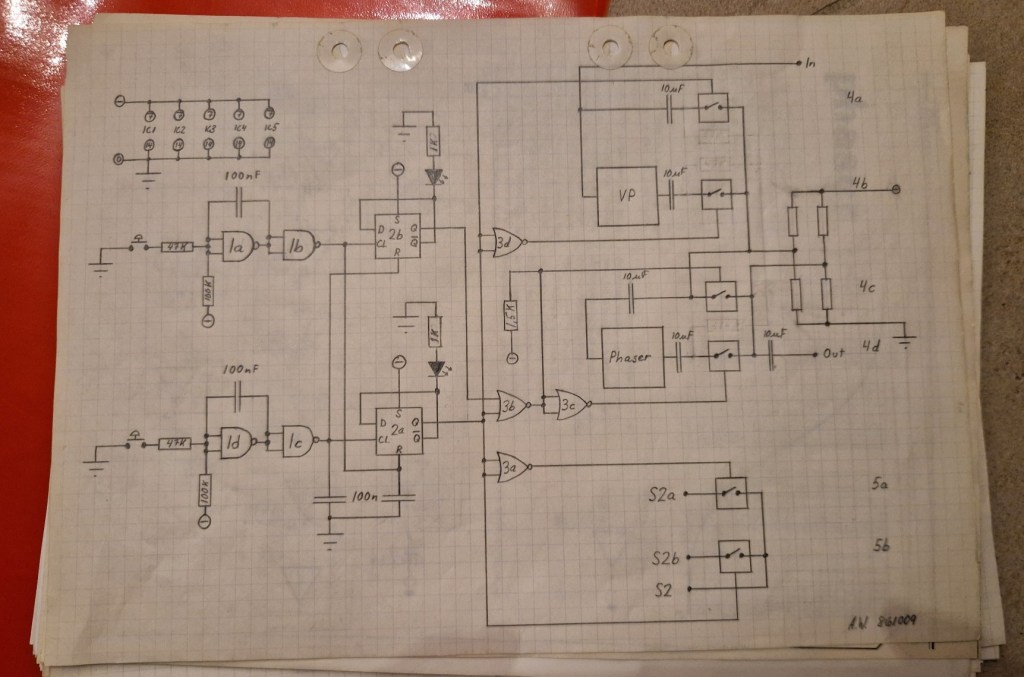
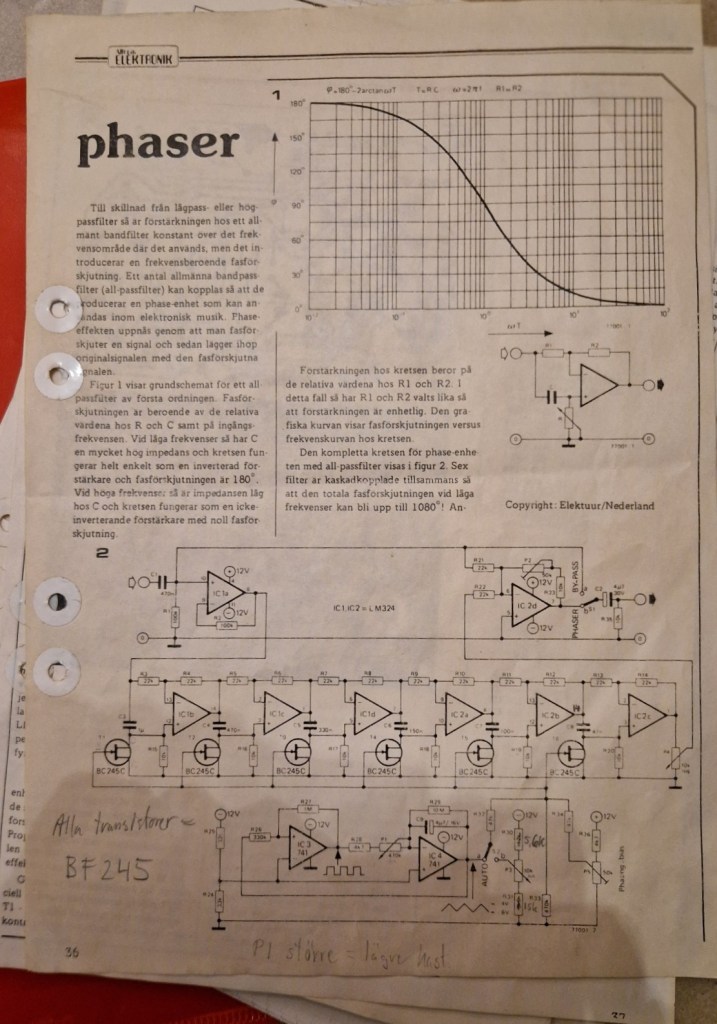
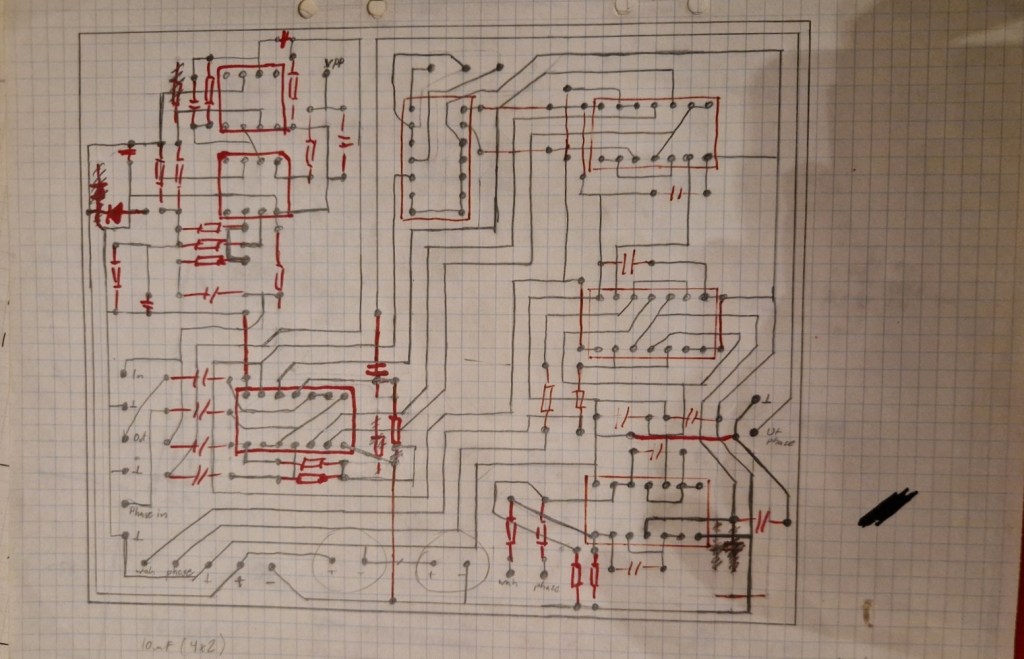
This is a well designed pedal with a lot of options. The heart of the pedal is the dedicated designed switching circuit that takes care of so much issues. The only downside of this design is that the input impedance is quite low when the instrument sees the first switch first (setting: Wah / Vol) which drops the volume drastically. You can cure that by placing a buffered pedal in front of this pedal. The main controlling unit is a dual ganged potmeter with the values of 1M and 10k. These potmeters can’t be found regularly and if broken would be hard to replace.
The volume pedal effect is nicely made and well designed by guru Craig Anderton. Due to the short range of the potmeter in a wah pedal a trimpot was added to adjust the range of the pedal from silent to full volume.
The phaser effect looks standard but alters from a known phaser design with the different valued caps in the filters. This is a common feature in Vibe pedals and is also implemented here. The Auto / Manual option is a very nice addition to an original circuit and adds a total new dimension to a phaser pedal!
The mod
Some mods I’ve done on this unit:
- Replaced the AC power supply with a 9V power supply input and added a 1044 charge pump to deliver +9V and -9V to the unit
- Replaced the LM324 in the phase circuit with two TL074 IC’s. The phase circuit would overdrive quickly making the sound muddy. By replacing the LM324’s with a TL074 all overdrive vanished.
- Replaced the 500k lin rate potmeter with a 500k rev log potmeter to control the Rate much better.
The sound
I really enjoy this pedal! The volume pedal is very efficient and does exactly what a volume pedal should do. And the design will take care of years of noise free volume control. But where this unit shines is the phaser! The phase sound is clear, bold and really characteristic/ unlike most other phasers. It creates a depth I don’t recognise from my standard Phase 90 and also adds more playability and versatility. The auto / manual mode is a nice addition to any phaser pedal but makes clear that the effect of a phaser lays in the movement and not in the filter; moving the treadle up and down creates that great sounds but trying to focus on a specific spot does not give that great results.
Yes, the switches are fragile so I don’t know how long this will keep up, but the pedal from 1986 still functions correct. Great sounds with a Dutch/Swedish DIY vibe! What is not to love?
Links
 Homepage
Leave a comment