So you want a small practise amp, tube overdrive unit or a small tube preamp? This Bass Master ‘pedal’ claims it can do all.
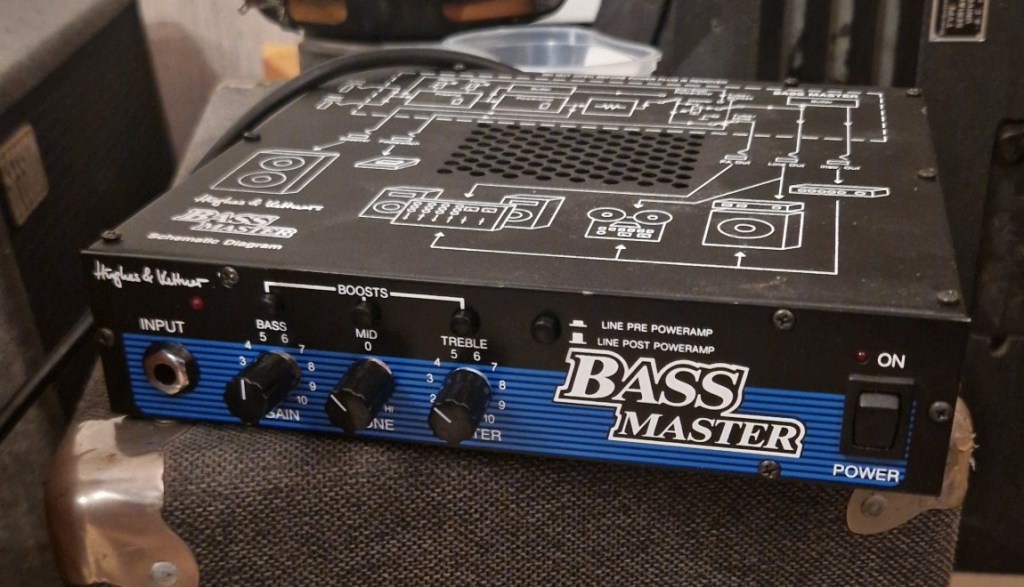
Hughes and Kettner (H&K) delivers well build and good quality tube amp sinds 1984 from the German town of St. Wendel. From 1988 they also started to produce overdrive preamp pedals like the Crunch Master, the Cream Machine, the Metal Master and the Bass Master (a good overview on these models can be found here). All these preamps were build for various sounds and uses for both guitar players as well as bass players and delivered preamp and poweramp distortion / overdrive from a single unit. Housed in small rack like pedal they all looked similar but sounded way different. For guitar players this units eventually went into a real pedal called the Tubeman (and later the Tubeman II).

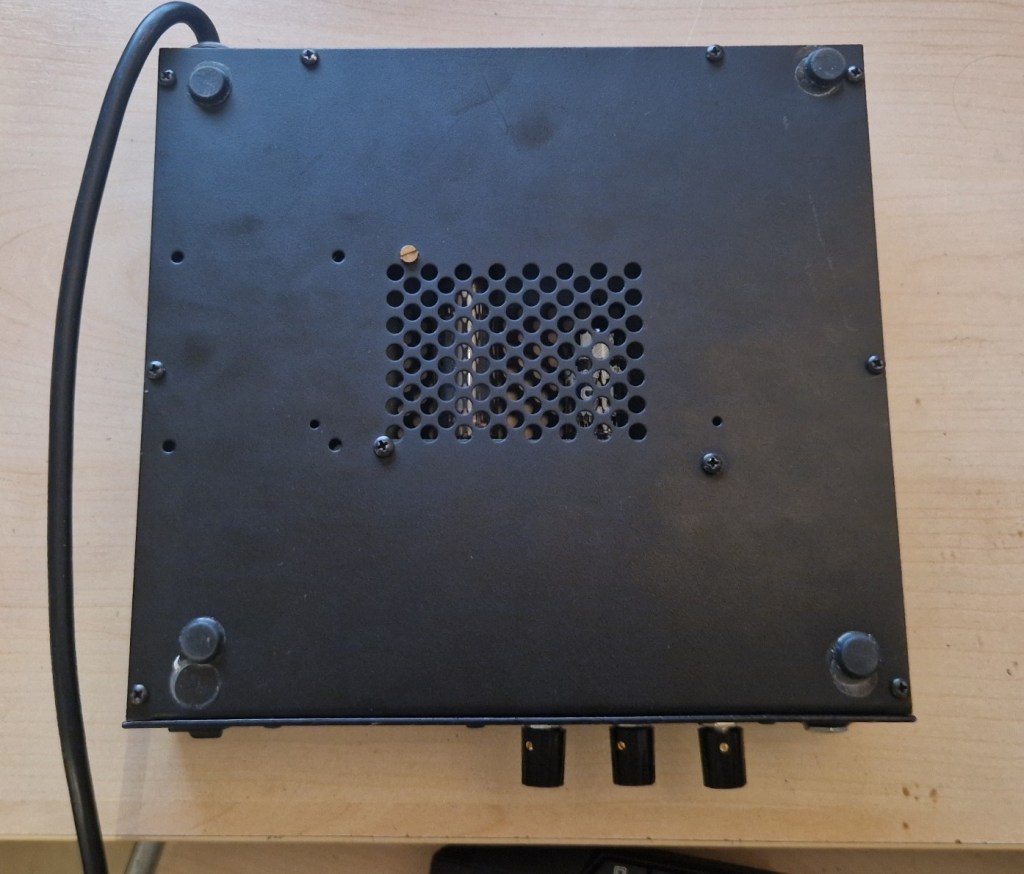
The Bass Master (or BATT in North America) was designed in conjunction with German bass player Peter Sonntag and bass manufacturer ESH. With this they delivered a small Bass Sound Machine that can be all: a small practise amp, a recording preamp and a overdrive unit, all in one. Simplicity was key: a single tone control to obtain superb tube tones with the utmost of ease. Lets dive in!
The circuit
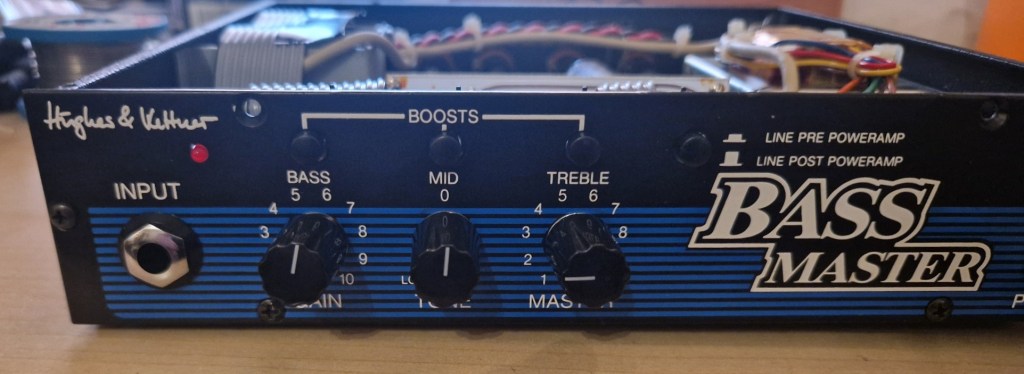
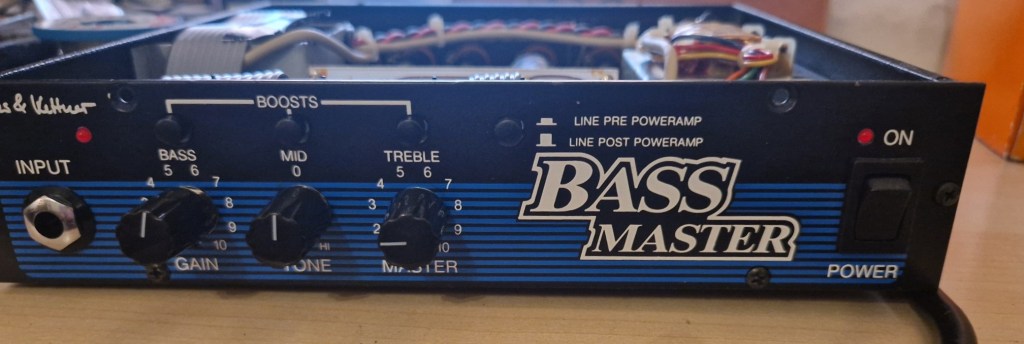
The pedal is housed in an all metal small rack unit which has most of the controls on the front and the jacks on the back; a single input jack though is also located on the front. These controls let you alter the drive of the preamp (‘Gain’), the EQ of the preamp (‘Tone’) and the output volume of the preamp (‘Master’). The ‘Tone’ knob is a single control that controls both the treble content as well as the mids and bass content of the somewhat ‘traditional’ amps tone stack and thus can give a lot of different tones. Further tweaking of the EQ is possible with the ‘Boost’ switches that are located above the controls that boost a specific range of frequencies. There are boost switches for ‘Treble’ (1Khz – 20kHz +8dB / add bite and sparkle), ‘Mid’ (500Hz – 2kHz +2dB / adds clarity and attack) and ‘Bass’ (80Hz – 400Hz +6dB / adds bass fundamentals). A last switch on the front switches the output pre-poweramp (the output of the pedal is not coloured by the poweramp) and post-poweramp (the output of the pedal is coloured by the poweramp).
On the back of the pedal there are six jacks and one switch. Here is also the connection to the AC power and a fuse to protect the circuit. The pedal runs on mains AC power. The jacks lets you connect an instrument (‘Input’, is parallel to the input on the front of the pedal), lets you connect a cabinet (‘Speaker’), a PA (‘PA out’), a recording desk (‘Line out’) or an amplifier (‘Instr. out’). The effect can be switched by a slide switch on the back (‘Bypass’) or by adding a single footswitch to the ‘Footswitch’ jack. When the effect is turned on a single LED is lit next to the input on the front plate.
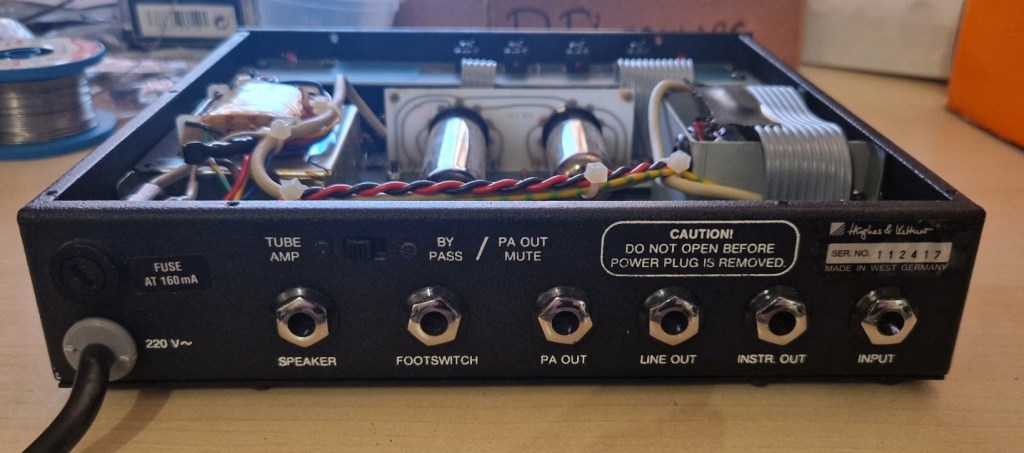
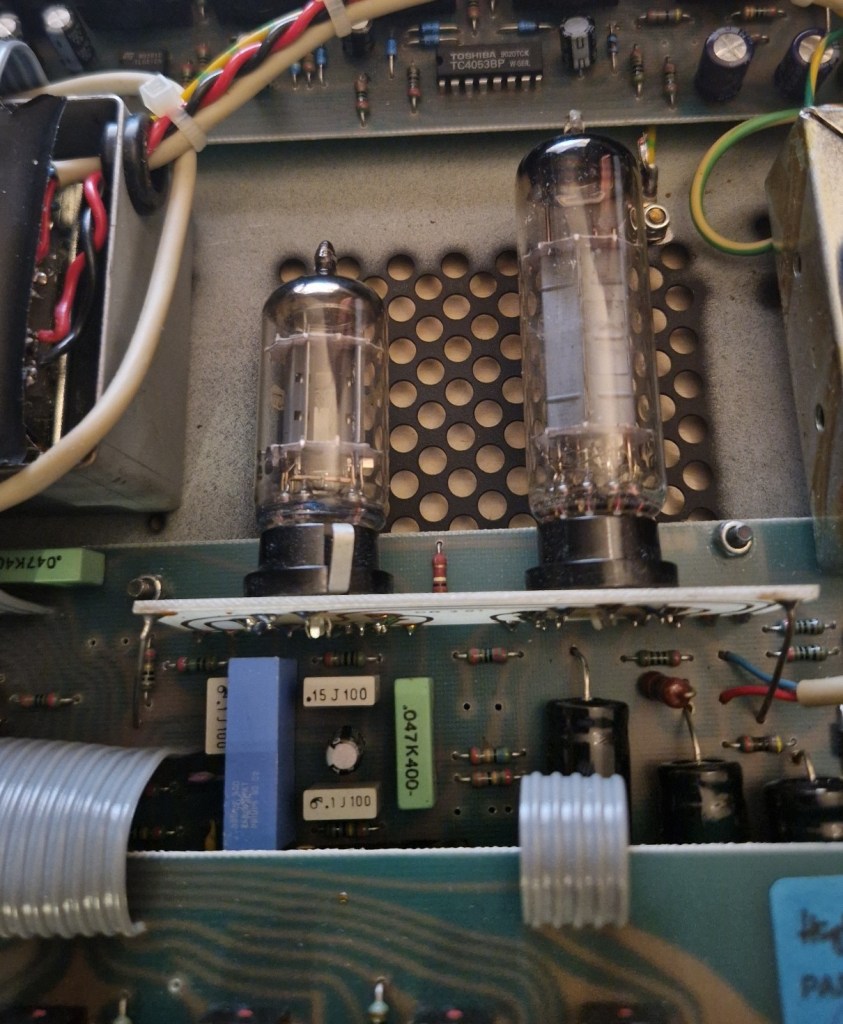
You need to unscrew the top of the pedal to replace the tubes. Inside are a single 12AX7 and a single EL84.
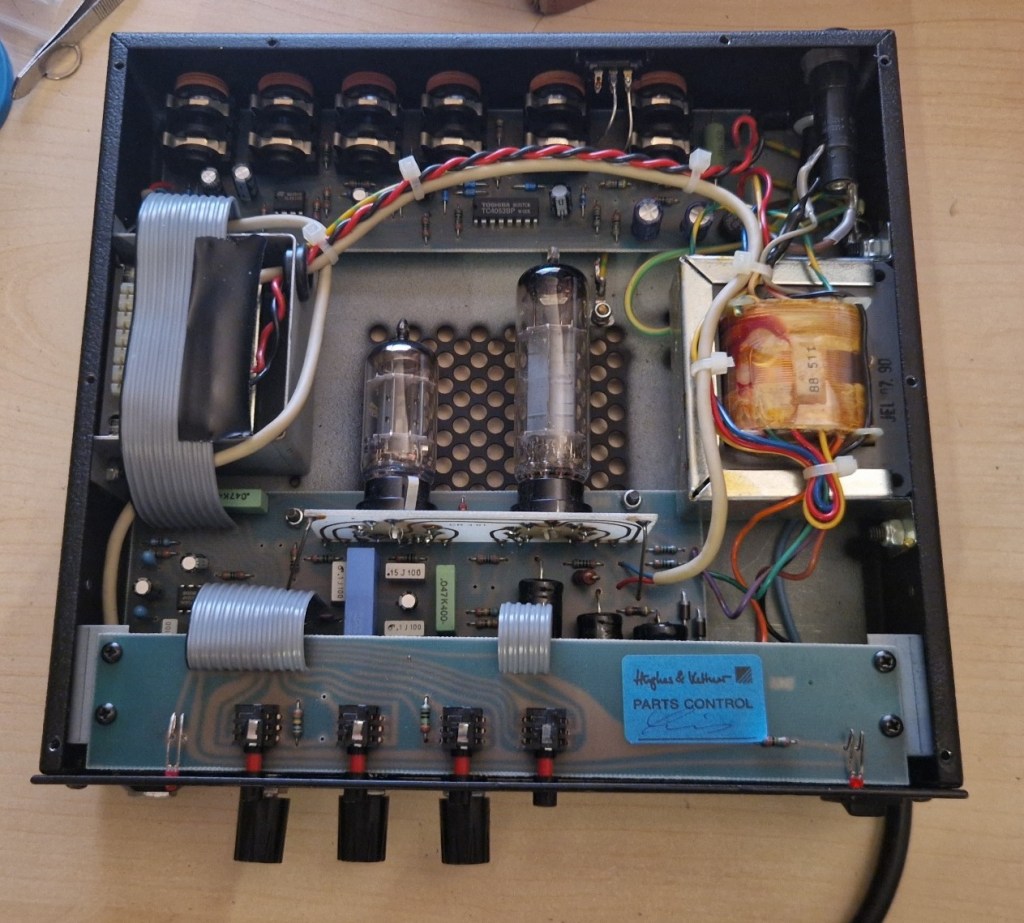
A schematic is available on this page. More info on the pedal can be found here. For reference only I also post the schematics here; both have a mistake: on the first one the 18k to ground on the EQ is not shown, in the second the gain potmeter has the wrong value.
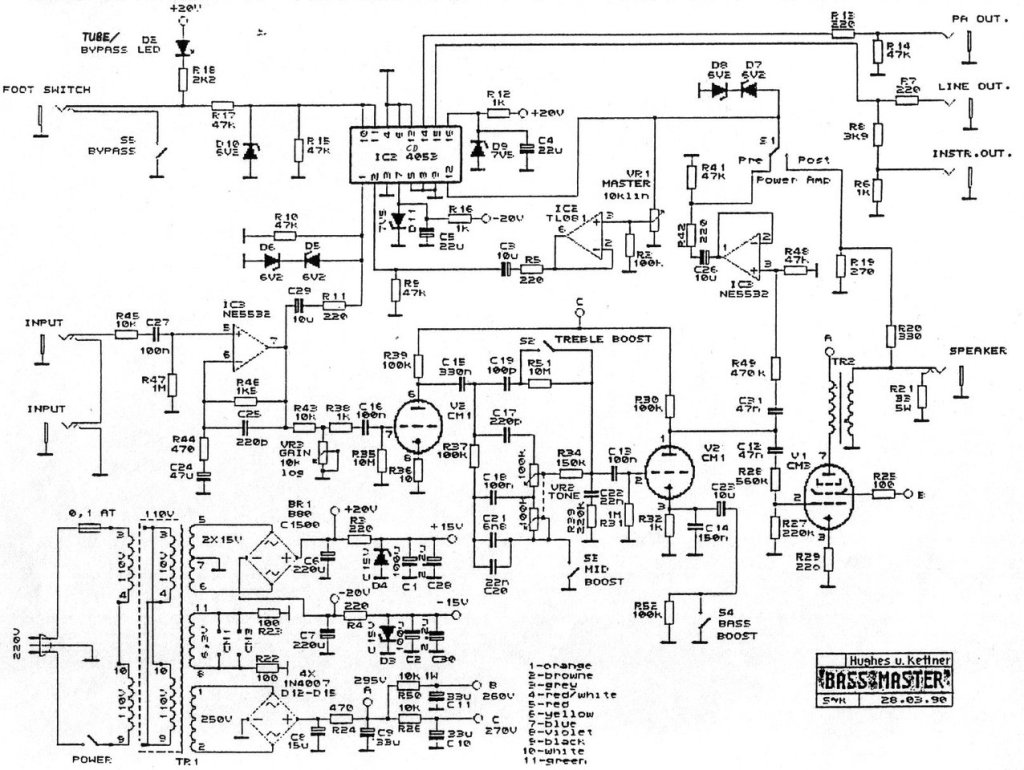
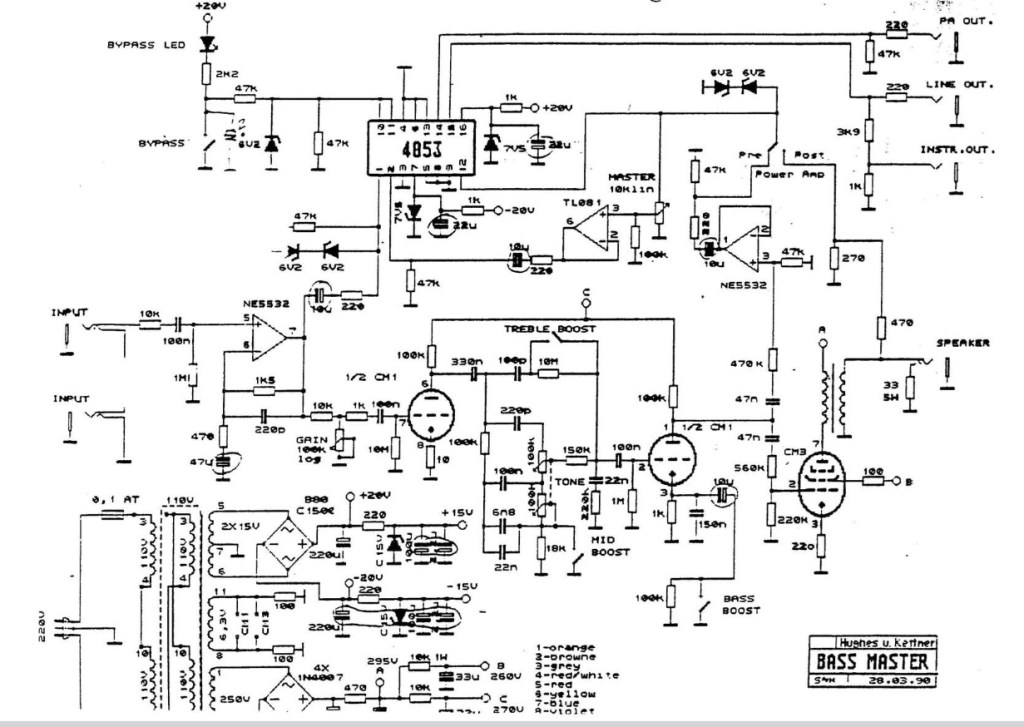
As you can spot the effect runs on a high voltage of approximately 300V. The effect has an input buffer (gain of approx 2) that feeds the first half of the preamp tube or the bypass signal. Gain is set by determining the amount of volume that flows into the tube section. EQ is a somewhat traditional tonestack you can also find on amplifiers. This is then followed by a gain stage made from the second half of the preamp tube and a poweramp stage made by a single EL84. If the effect is used as a practise amp the output of the power amp is connect to a speaker delivering 5W of output power. In the manual it is stated that ANY speaker cab can be used with this unit. If not, a 5W resistor to ground takes the load of the poweramp. This signal is then reduced by two resistors making it safe for further use.
Switching is done with a 4053 IC that switches between input signal or effect signal. The Pre/Post switch determines if the effect uses only the preamp tube’s output or also the poweramp tube’s output. If the effect is used to feed the PA or is used as a practise amp the master volume does not work. In all other functions the master volume is added.
The fix
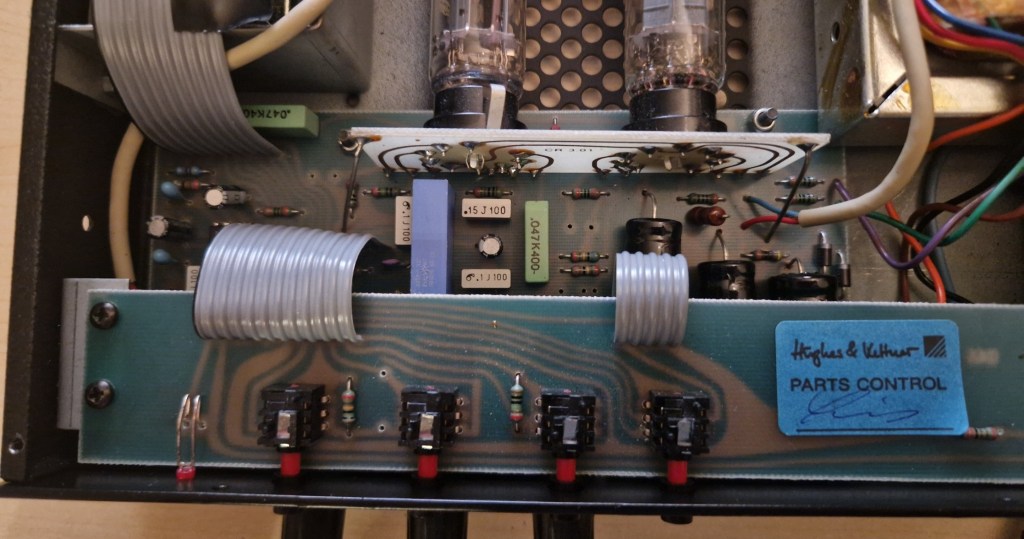
I’ve seen a couple of these effects over the years. Overall they tend to stay well functioning but they do require a capacitor swap after some years of use. I noticed that most low voltage caps will go bad early in the process and require replacement to keep the switching and the functioning of the unit prefect. The power amp tube will be used quite extensively and a swap can breath new life in this effect.
The potmeters are really small and replacements can’t be easily found. I contacted H&K for this but they had no source for these potmeters anymore. In the end I replaced the potmeters in one of the units with stock potmeters which worked perfect (although they won’t fit the traces on the PCB).
The sound
This pedal is a Swiss army knife for bass players. If you need a small practise amp that can also fill small rooms or gigs, its perfect! If you’d like to have a warm sounding tube preamp / DI solution, its perfect! And if you’d like a gritty fuzzy overdrive unit, it is perfect.
With a cabinet connected the overall feeling of the amp is dynamic and warm. It has a surprising amount of bass volume available and the tonal options are more then sufficient. When the unit is connected to a recording device, the unit further shines! It adds warmth and tube goodness when the poweramp is disabled but adds grit and treble response when the EL84 is engaged. Yes, this setting loses some of the warmth but you’ll gain a more sensitive and well behaving fuzzy preamp that can fill those gaps you need on some music. And connected to an amp you can use it as a colouring preamp or a dedicated overdrive machine.
There are some small quirks. The ‘Tone’ knob is somewhat restricted by controlling all frequencies by a single knob yet the pushbutton options above it make it more broad sounding. Total control? No! But easy to dial in those muffy lows or sparkling highs.
In the end it is a preamp that comes close to having a full tube bass amp roaring behind you without having all the volume issues of such amplifiers in the size of a lunch box. A nice addition to any rig!
The links


Leave a comment