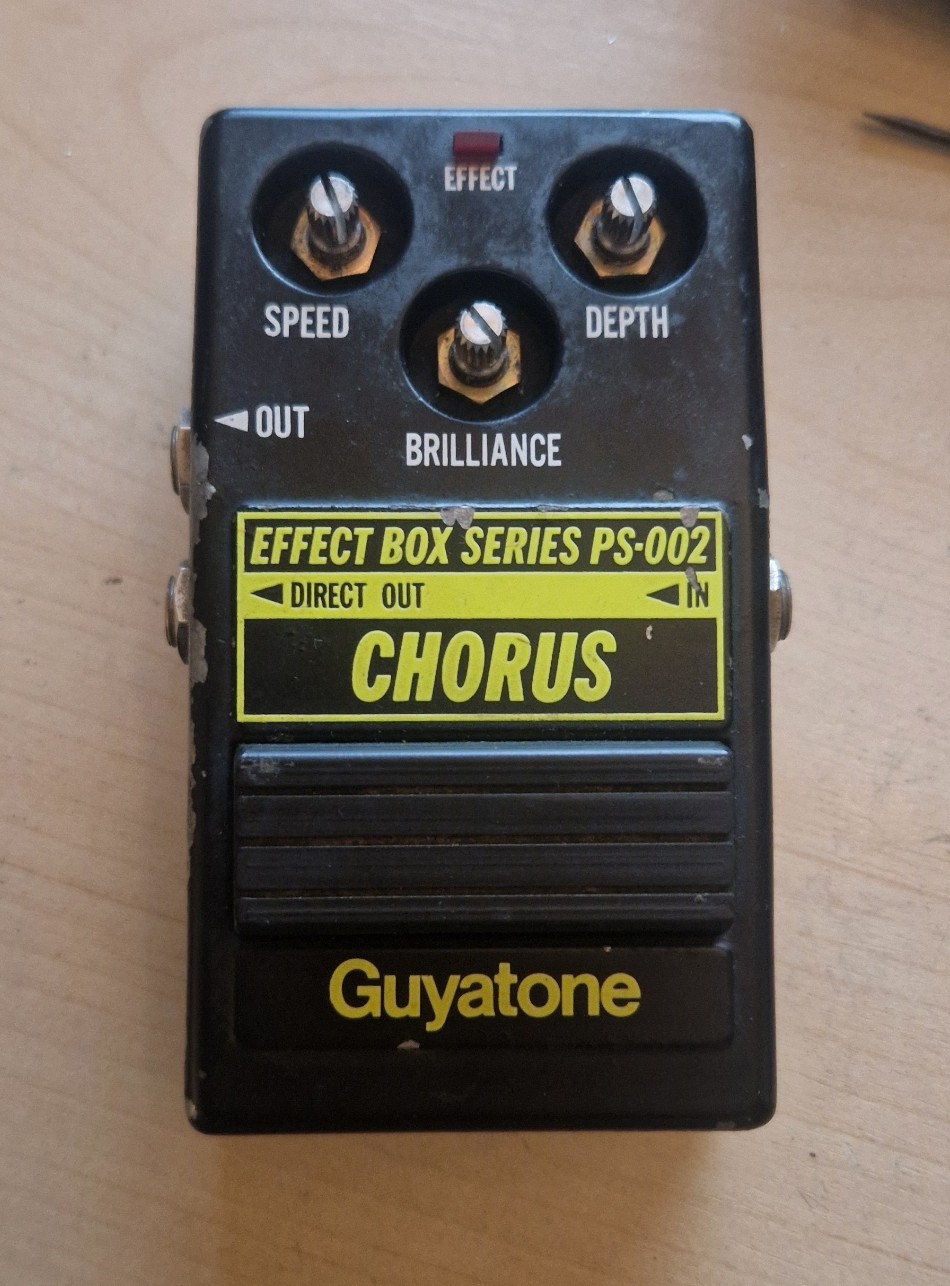
Recently I got this pedal in as it didn’t function. When opened up it had a big hole in one of the chips! Call me interested!
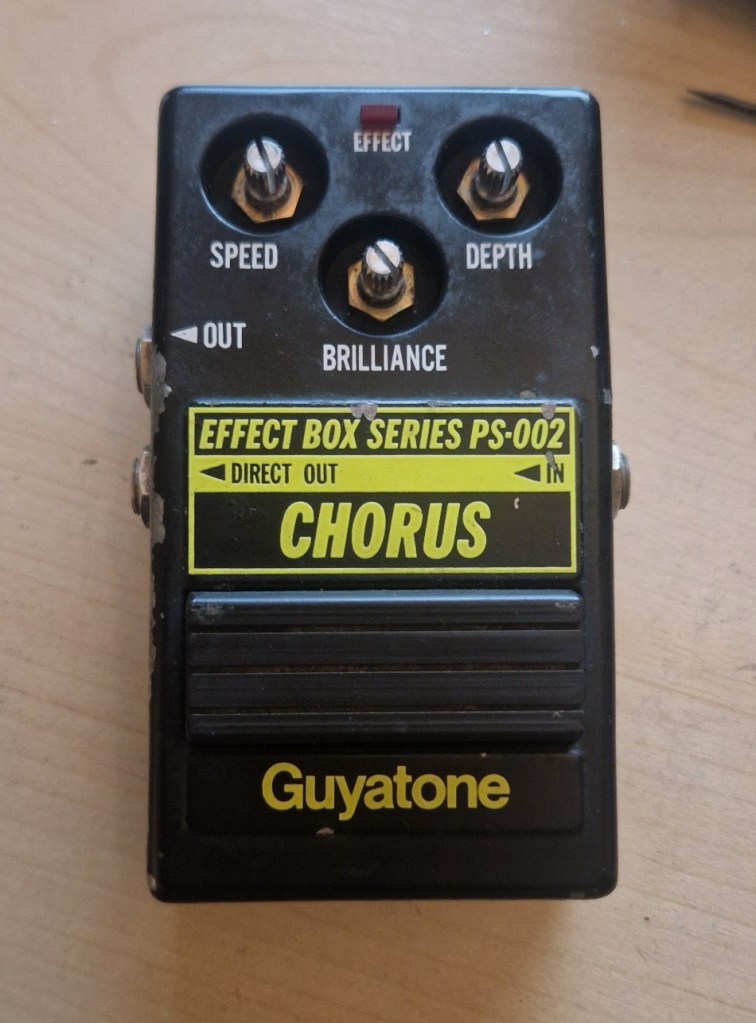
Guyatone was founded in 1933 and can be considered the oldest guitar manufacturer of Japan. This produced a wide line of instruments from guitars, electric instruments, amps and effect pedals. The brand name was Guyatone but the official name for the company shifted a while between Guya and Tokyo Sound Co.; the latter version became the standard. This company shut down in 2013 and, after releasing the rights back to the original family, the company was opened up again and restarted production.
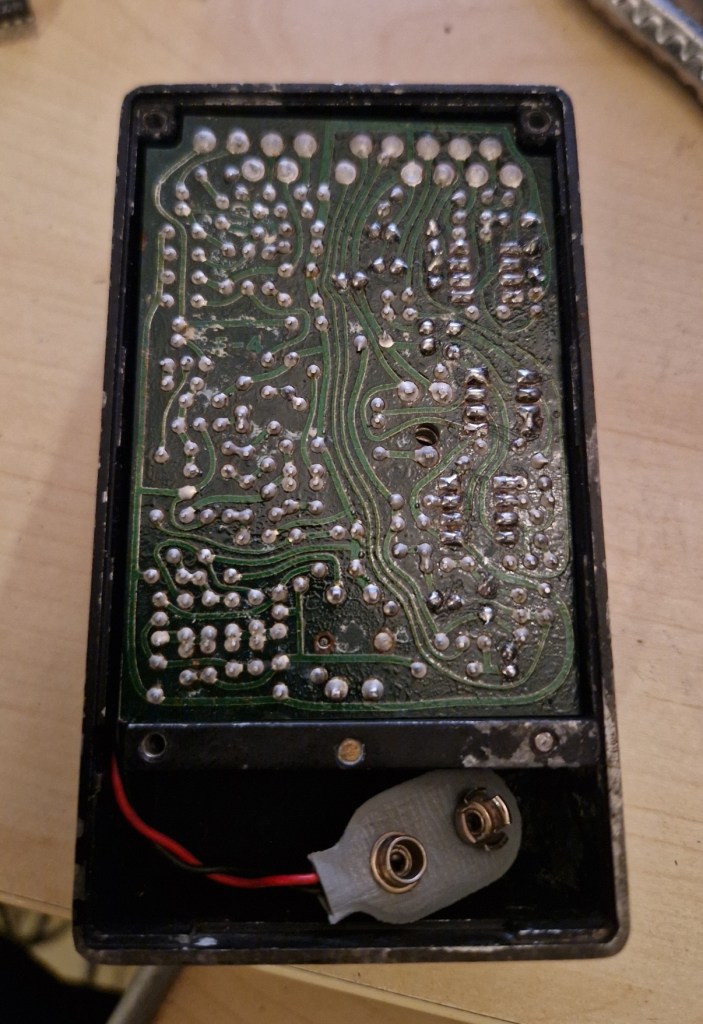
Guyatone released a lot of different pedals under a lot of different names. Even Josh Scott released a video discussing some of these pedals. If we look at the line of pedals this chorus came from (the PS-00X line) we can spot in the effects database that this model was made under different names. From my own experience I can even state that this pedal was released in two versions (which can’t be determined from the outside but only from the PCB):
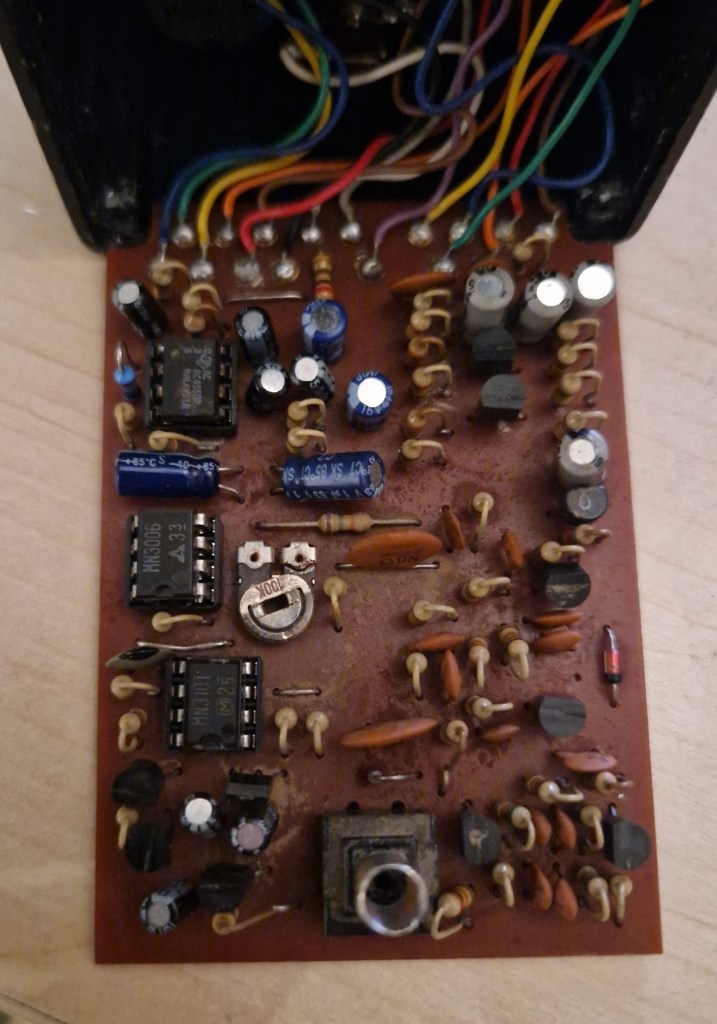
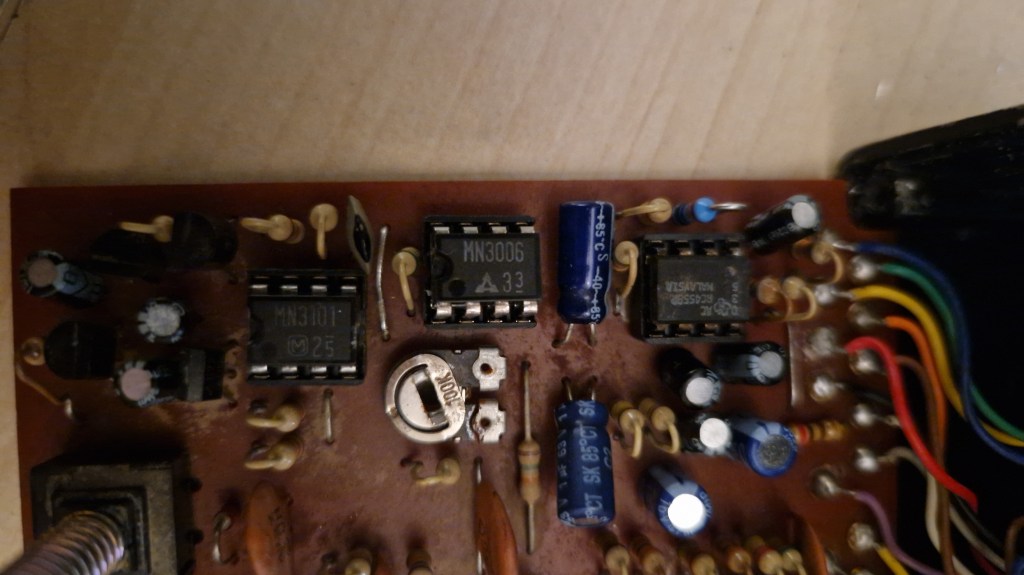
- A very early version with a PCB that consists of a single double opamp, a lot of transistors and a MN3006 / MN3101 combo (BBD with 128 stages). The pedal this post is made around serves as an example of this version.
- A somewhat later version with a PCB that consists of two double op-amps, a lot of transistors and a MN3009 / MN3101 combo (BBD with 256 stages). In this post on TGP you can see a fine example of it.
The circuit
This pedal is housed in a all metal enclosure with three knobs and a single footswitch. It has a single input and dual outputs. One of the outputs is a ‘direct out‘ output, an output that has the same signal as the input signal. The main output gives out both the bypass signal as well as the output of the effect. If a cable is inserted in the ‘direct output‘ it kills both the bypass signal as well as the clean signal (that is always present in a chorus pedal) on the main output. By doing this you transform this pedal from a chorus pedal in a vibrato pedal.
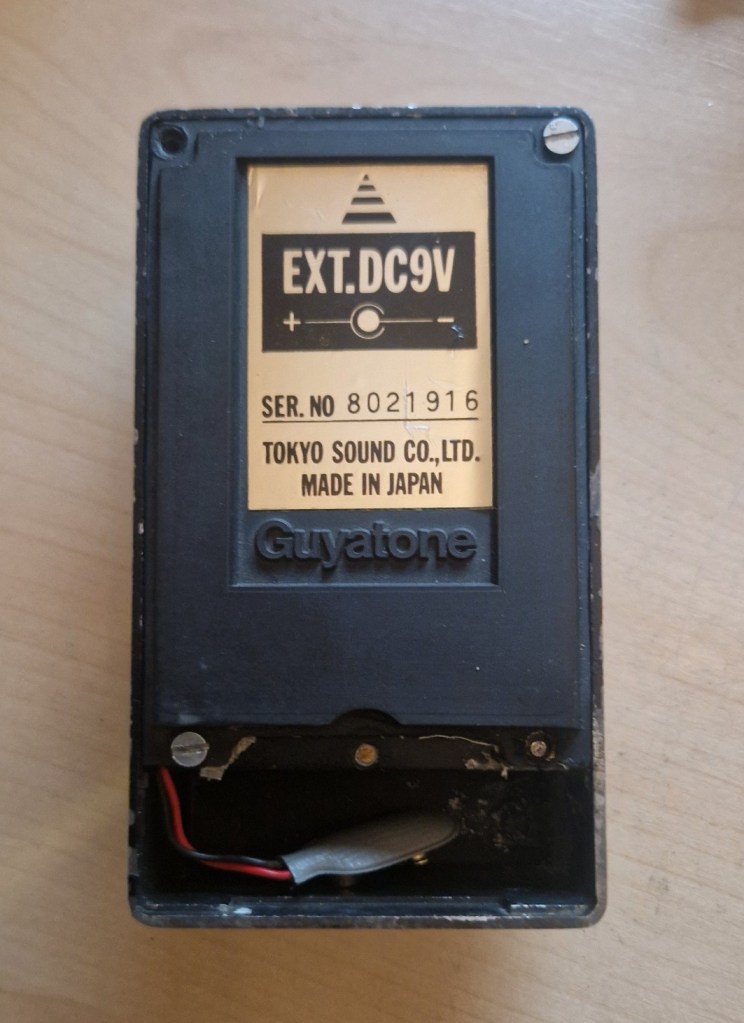
The pedal has knobs for ‘Depth’ ( the amount of chorus effect), ‘Speed’ (the movement of the effect) and ‘Brilliance’ (tone control of the chorus effect). The pedal can be used with a battery as well as an 9V adapter. The pedal is not true bypass; a ‘buffered’ clean line is always present and the chorus effect is added parallel to that line with the pedal engaged. Switching is done with a FET.
Opened up the PCB consists of various through hole components, a lot of transistors, a single dual opamp and a MN3006 / MN3101 combo. I found a schematic here but some parts didn’t feel fit. I traced the original pedal here:
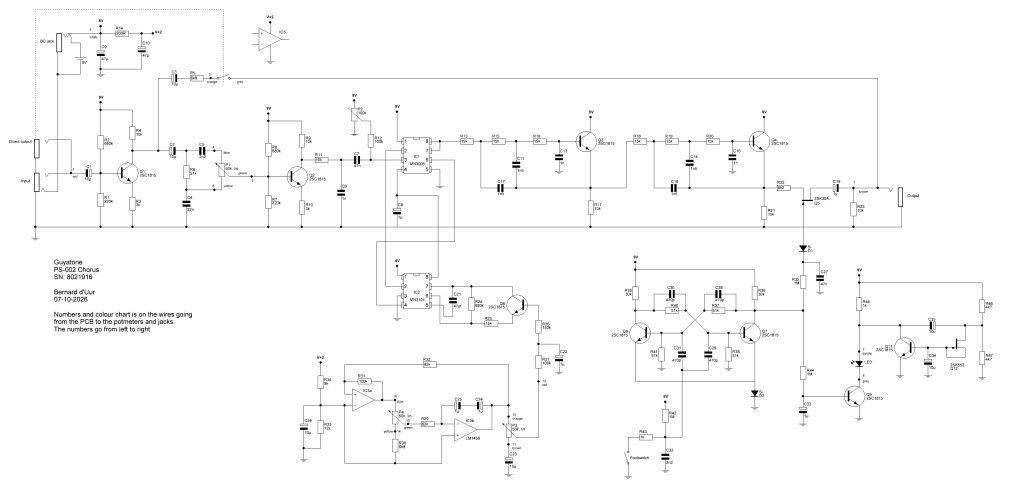
As you can spot this pedal is ‘different’ compared to most chorus pedals. A single transistor gain stage is used on the input to deliver a ‘buffered’ output and fixing the needed impedance that the latter circuit needs. No pre-emphases stage is present, no compressor / expander circuit is present and the tone control is pre-delay stage (quite uncommon in chorus pedals). Also the choice of a MN3006 is uncommon as chorus pedals often has the more common MN3007 or MN3207 present. The switching is also something I’ve hardly seen in pedals.
The fix
This pedal came in with a big hole in the MN3101; easily it could be determined the pedal didn’t work anymore. After some inspection the MN3101, MN3006 and RC4558 were broken and needed replacement.
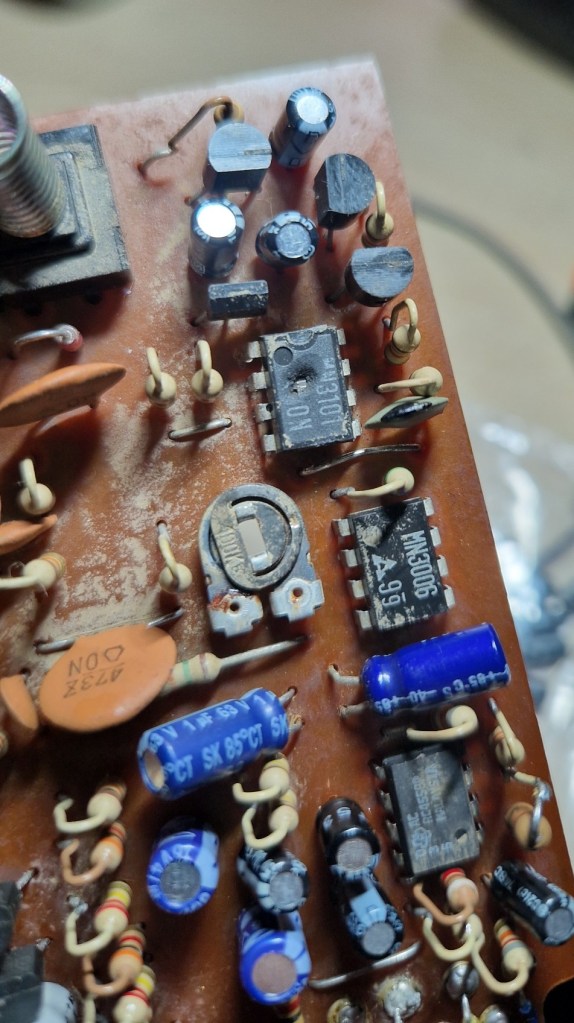
As the pedal now started to work it still didn’t have any movement in the signal. I traced this back to a replaced resistor; in the unit a 10k resistor was placed in the LFO section where the pedals asks for a 100k. After replacing the 10k with a 100k the pedal came back to life!
The sound
I have a weak spot for chorus pedals. And a Japan based chorus pedal that uses a MN3006 is uncommon and attracts my attention.
The pedal has a clear and own character with a slight emphasis on the lower mid region both in bypass as in effect output. The chorus effect is wide and the movement it brings suits the effect. The ‘Brilliance‘ knob functions perfectly and adds another character to the effect. The location of this knob in the circuit makes it has more effect on the output signal compared to a more common chorus effect that has the tone knob located later.
When I used this pedal it was quite noisy! This effect did not match with a switching power supply, a very common power supply available in the shops. When a proper (transformer based) power supply or battery was used this noise directly went away!
In the end a rare and very well sounding chorus pedal with a whole different character. If it suits you, enjoy it as much as you can!
Links
- Entry on the effects database on this pedal
- Post on TGP on a version of this pedal
- Post on DIYstompboxes.com on this pedal with a (wrong) schematic


Leave a comment